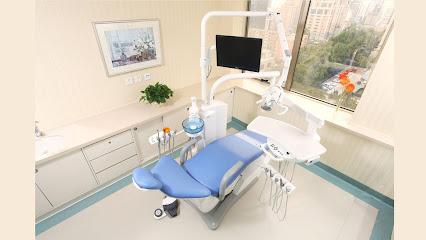


Every patient at our practice is treated with honesty, compassion and exemplary dental care. Our customer service speaks for itself! Come in for an office tour or to meet our staff and you will see what we mean!
Dr Amatey Wensel Dr. Wensel loves meeting people from all walks of life and listening to their unique stories. If you choose to visit our office, she will make every attempt to serve your family and deliver a positive dental experience. Dr. Wensel attended the University of Texas at Dallas, where she earned her Bachelor degree in Biology and Business, and completed her dental studies at Baylor College of Dentistry, earning her Doctorate of Dental Surgery. Dr. Wensel attends many continuing education seminars, most recently learning about the latest in CAD-CAM crown technology. She is a member of the Texas
Dr. Mark Padilla Originally from a small town in Northern California, Dr. Mark Padilla moved his roots to the great state of Texas after earning his bachelors in Provo, Utah. Dr. Marks family-focused, fun-loving nature, combined with his exceptional qualifications in the field of orthodontics, make him an integral asset to the team. Education Dr. Mark earned his Bachelor of Science at Brigham Young University. He went on to obtain his Doctorate of Dental Surgery from Baylor College of Dentistry. In conjunction with his orthodontic residency, Dr. Mark obtained a Master of Science in oral biology along with his certificate
Dr. Scott Williams Dr. K. Scott Williams is from Commerce, Texas and did his undergraduate work at Texas A&M University. Dr Williams received his Doctor of Dental Surgery at the University of Texas Dental Branch Houston. He has practiced dentistry for 26 years, and is married to his high school sweetheart with 4 children. Dr. Williams visits our office once or twice a month to perform in-house oral surgery services as a service to our patients. He uses his abilities to treatment plan the most conservative treatment that will provide the best long-term solution to his patients dental needs.
Dentistry is the diagnosis, treatment, and prevention of conditions, disorders, and diseases of the teeth, gums, mouth, and jaw. Often considered necessary for complete oral health, dentistry can have an impact on the health of your entire body.
A dentist is a specialist who works to diagnose, treat, and prevent oral health problems. Your dentist has completed at least eight years of schooling, and received either a DDS (Doctor of Dental Surgery) degree, or a DMD (Doctor of Dental Medicine) degree. If your doctor is a pediatric dentist, this means that they specialize in caring for children from infancy through their teen years. Your dentist has received the proper education and training needed to work with young kids. Other specializations include:
The American Academy of Pediatric Dentistry (AAPD) recommends that children first see a dentist as early as six-months-old and no later than one-year-old. During this time, your childs baby teeth will be coming in and your dentist can examine the health of your childs first few teeth. After the first visit, be sure to schedule regular checkups every six months.
Children, teens, and adults should all see the dentist for a regular checkup at least once every six months. Patients who are at a greater risk for oral cancer or gum disease may be required to see the dentist more than just twice a year. You doctor will help determine how often you should visit the dentist for regular checkups.
A cavity is a small hole that forms inside the tooth because of tooth decay. Cavities are formed when plaque buildup on the outside of the tooth combines with sugars and starches in the food you eat. This produces an acid that can eat away the enamel on your tooth. If a cavity is left untreated, it can lead to more serious oral health problems. Cavities can be prevented by remembering to brush your teeth at least two times a day and floss between teeth at least once.
A filling is a synthetic material that your dentist uses to fill a cavity after all of the tooth decay has been removed. Fillings do not generally hurt because your dentist will numb your mouth with an anesthetic. Fillings are made from a variety of different materials, including composites, gold, or ceramic. If you need a filling, be sure to talk to your doctor about what type is best for you and your teeth.
According to your dentist and the American Dental Association, you should brush your teeth at least two times a day. Brushing keeps your teeth, gums, and mouth clean and healthy by removing bacteria-causing plaque. It is also recommended that you use a soft bristle toothbrush and toothpaste that contains fluoride when you brush your teeth. You should spend at least a minute on the top teeth and a minute on the bottom teeth, and remember to brush your tongue it will help keep your breath smelling fresh!
Your toothbrush will eventually wear out, especially if you are brushing your teeth twice a day for two to three minutes each time. Your dentist recommends that adults and children change their toothbrush every three months. If you are using an electric toothbrush, be sure to read the directions because you may not need to change toothbrush heads as frequently. Patients with gum disease are encouraged to change their toothbrush every four to six weeks to keep any bacteria from spreading. After brushing, rinse your toothbrush with hot water to kill germs and keep the bristles clean. If youve been sick, be sure to change your toothbrush as soon as possible.
Also known as periodontal disease, gum disease is mostly caused by plaque and bacteria buildup that is not treated in its early stage. Other causes of periodontal disease include tobacco use, teeth grinding, some medications, and genetics. Gingivitis is the beginning stage of gum disease, and, if detected, is treatable. Gingivitis left untreated may turn into gum disease. Advanced gum disease will lead to tooth and bone loss, and is a permanent condition. Brushing your teeth regularly and visiting the dentist every six months will help prevent gingivitis and more severe cases of periodontal disease. Common signs of gum disease:
Yes! In fact, its even more important that patients receiving orthodontic treatment visit their dentist regularly. With braces, food may be caught in places that your toothbrush cant reach. This causes bacteria to build up and can lead to cavities, gingivitis, and gum disease. Your dentist will work closely with your orthodontist to make sure that your teeth stay clean and healthy while wearing braces.
Simply call our practice! The Saddlebrook Dental and Orthodontics front desk staff will be happy to help schedule your next dental checkup at your convenience. If you are a new patient, please let us know and we will provide you with all the information you need for your first dental visit.