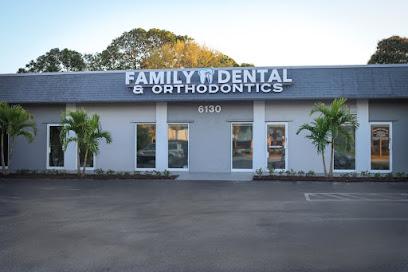


Our general dentists, specialists and hygienists all work together to deliver exceptional dental care to patients in and around Margate, Coconut Creek, Coral Springs, Pompano and surrounding areas. Family Dental Associates is a multi-specialty dental care provider that has been serving the Margate community and surrounding areas for over 30 years!
Each one of our dental specialists in our multi-specialty dental practice strives to deliver customized dental care. Our services includeGeneral Dentistry,Cosmetic Dentistry,Orthodontics,Endodontics,Periodontics,Oral Surgery,Prosthodontics&Dental Implants.
Dr. Marc Mingel Dr. Marc Mingel is a general and cosmetic dentist. Originally from south Florida, Dr. Mingel received his Bachelor's degree in Biology from Columbia University in New York and his dental degree from Tufts University School of Dental Medicine in Boston, MA. After practicing dentistry in Boston for a few years, Dr. Mingel moved back home to Florida to be closer to family.
Dr. Mingel's patients appreciate his friendly, easy-going disposition, as well as his attention to detail. As your dentist, Dr. Mingels goal is to help you achieve a healthy, beautiful smile that enhances not only your teeth, but also your confidence and self-esteem. He is committed to providing personable, comfort-conscious dentistry that is as relaxing and painless as possible.
Dr. Mingel is a dedicated advocate for epilepsy awareness, serving as an Ambassador for the Danny Did Foundation since 2014 and on the board of directors for the Epilepsy Foundation of Florida since 2015.
In his free time, he enjoys spending time with his wife, Stefanie, his adorable three daughters, Haven, Cameron and Blake, and their rambunctious Labradoodle, Tofu. As a family, they enjoy the beaches in Florida and the snow and mountains of Colorado.
Dr. Steven Polasky Dr. Steven Polasky is a native-born Floridian growing up in the Fort Lauderdale area. He attended the University of Florida for undergraduate studies in microbiology. Dr. Polasky went on to attend The Ohio State University dental school and upon completion of his studies, worked in the western Massachusetts area for 10 years in a family dental practice, practicing all aspects of general dentistry.
After spending his early years in Massachusetts, Dr. Polasky returned to Florida to join family and friends whom he had grown up with and became a part of Family Dental Associates more than 22 years ago. Dr. Polasky takes special interest in all of his patients, caring not only about the quality of their dental care but also in providing a comfortable, relaxing and painless dental experience. After spending so many years at Family Dental Associates, his patients are like family to him and his compassion for his patients clearly shows. Dr. Polasky is always there to answer any dental questions or concerns and strives to make Family Dental a second home for all of his patients as well.
Dr. Sofia Blackmore Dr. Sofia Blackmore was born in Santiago, Chile and moved to Florida when she was six years old. Dr. Blackmore has wanted to be a dentist since childhood when she was first introduced to the profession in a middle school career fair. She obtained her bachelors degree from Florida International University and later earned her Doctor of Dental Medicine Degree in 2006 from Nova Southeastern University.
Dr. Blackmore has been working for the past 10 years at Family Dental Associates actively promoting patient-centered care for patients of all ages. She is dedicated to providing all of her patients with the highest level of treatment available to meet their dental health needs while focusing on a preventive approach to ensure they maintain a healthy smile. Dr. Blackmore is affiliated with the American Dental Association and the Florida Dental Association.
When not practicing dentistry, Dr. Blackmore enjoys spending time with her family including her husband and their three children. She also enjoys cooking for family and friends, outdoor water sports and reading books.
Dr. Brad Lewis Brad Lewis, DMD is a general, cosmetic and restorative dentist. Originally from the Chicago area, he has lived in Florida since 1971. Dr. Lewis completed his undergraduate studies at Florida State University and thereafter graduated University of Florida College of Dentistry in 1984.
He's a member of the American Dental Association, Florida Dental Association and the South Florida District Dental Association. He is well known for hiscalming demeanor, gentletouch and sense of humor which gives each patient a positive dental experience.
Dr. Robert Gittess (Endodontist) Dr. Robert Gittess completed his undergraduate studies at Tulane University, graduate studies at Case Western Reserve Dental School and advanced education and specialty training at University of Pennsylvanias Albert Einstein Medical Center.
Dr. Gittess has been recognized with the U.S. Top Doctors Award 24 years in a row. He is a member of the American Association of Endodontists, Florida Association of Endodontists, American Dental Association and the Broward County Dental Association.
Dr. Robert Gittess is married to Dr. Laurie Gittess, our Family Dental Associates Orthodontist. They have a son and a daughter who both live in New York City. Dr. Gittess is an avid traveler, photographer and sports enthusiast. He is a south Florida native and has been with Family Dental Associates for over 18 years.
Dr. Rory Spearing (Oral Surgeon) Dr. Rory Spearing completed his undergraduate studies in 1983 at Columbia University in New York and his graduate studies in 1988 at Columbia Universitys School of Dental and Oral Surgery. He went on to complete his residency in Oral and Maxillofacial Surgery at Lincoln Hospital / New York Medical College in New York.
Since 1992, Dr. Spearing has been in private practice in Oral Surgery and has worked with multi-specialty groups in Florida, California, New Jersey and New York. He was born in the U.K. and enjoys traveling with his wife Diane who is an English professor. Dr. Spearing enjoys reading, writing, and hiking, and is currently finishing training for his private pilots license.
Dr. Sean Yockus (Prosthodontist) Dr. Sean Yockus, a native Marylander, attended Drew University in Madison, New Jersey for his undergraduate degree in Chemistry. An only child, his parents were kind enough to drop him off at college and 'then' move to Florida. A Floridian since holiday break of 1983, Dr. Yockus loved his childhood dentist and Orthodontist. Because of their influence he chose to pursue a career in dentistry.
Upon being accepted to five dental schools - the University of Florida was his choice and a perfect fit. A proud Gator dentist, Dr. Yockus stayed in Gainesville to specialize and become a charter class graduate of the UF Prosthodontic residency. He has practiced his specialty for 25 years and has been with Family Dental Associates since 2006 placing implants and completing difficult prosthetic dental rehabilitations.
Prosthodontics is the least recognized dental specialty by the general public. It is the specialty of restoring and replacing broken and missing teeth by fixed or removable prosthetic dentistry. He likes to joke, 'people don 't know what a Prosthodontist is until they need one'. When Dr. Yockus meets new patients, he likes to remind them of solid dental home care hygiene advice: 'Toothbrush multiple times a day after meals, and you only floss the teeth you want to keep'. That should be all of them!
Dr. Laurie Gittess (Orthodontist) Dr. Laurie Gittess completed her undergraduate studies in 1984 and her graduate studies in 1986 at Case Western Reserve University in Cleveland, Ohio as part of an advanced combined degree six-year program. She continued with her advanced education and orthodontic residency at Case Western Reserve University where she received her Certificate in Orthodontics and Dentofacial Orthopedics, and her Masters Degree in Orthodontics in 1988.
Dr. Gittess practiced in Cleveland for five years while also teaching as an assistant professor at C.W.R.U. and Mt. Sinai Medical Center. During her academic years, Dr. Gittess won several research awards and went on to publish her work.
Dr. Laurie Gittess is married to Dr. Robert Gittess, our Family Dental Associates Endodontist. They have a son and a daughter who both live in New York City. She is an avid runner and enjoys cooking. Dr. Laurie Gittess has been at Family Dental Associates since 2010.
Dr. Robert Weishoff (Periodontist) Dr. Robert Weishoff completed his undergraduate studies at the University of Florida. He is a graduate of the University of Pennsylvania School of Dental Medicine where he was awarded the George Bronkovic Award for Service and Dedication.
After dental school he completed an Advanced Education in General Dentistry Residency (AEGD) at Nova Southeastern University, before going on to receive his specialty certificate in Periodontics and a Masters Degree in Biomedical Sciences from the University of Maryland Dental School.
Dentists use the term root canal in referring to the tiny, narrow passageways that branch from a central, hollow space in your tooth (called the pulp chamber) down to the ends of the tooth roots. The term can also be used as a shorthand for root canal treatment that is, the procedure used to save the tooth if the soft tissue deep inside of it (called pulp) becomes acutely inflamed or infected.
If tooth pulp becomes acutely inflamed or infected because of decay or injury for example the tissue will need to be removed in order to save the tooth and stop the infection from spreading. As an adult, you don't actually need the pulp its primary use is to aid in tooth development during childhood.
We could remove the whole tooth, but it's always better to try to save it especially since root canal treatment is routine and has a very high success rate (over 90%). Saving the tooth can prevent other troubles from occurring later on; these could include bite problems from teeth shifting position, difficulty eating, and loss of jawbone volume and density.
The procedure normally causes no more discomfort that a filling would. Root canal treatment may have a bad reputation, but it is undeserved; in this case it's the disease that's to blame and not the cure. In other words, the infections that make the treatment necessary in the first place are often painful because they are inflaming tissue that has lots of nerves and therefore is very sensitive. Root canal treatment actually relieves this pain!
After numbing the area, a tiny hole is made in your tooth to access the pulp chamber and canals. After we remove the diseased tissue, we will disinfect the chamber and the canal(s) all the way to the root end(s). Teeth in the front of the mouth have one root and generally one canal; back teeth have two or three roots and generally three or four canals. We will fill those canals and the pulp chamber with an inert, biocompatible material, and seal it with adhesive cement. The access hole will receive a temporary filling.
Your tooth may feel sensitive for a few days, but any discomfort can usually be relieved with over-the-counter pain medication or anti-inflammatories like ibuprofen. You will be instructed to avoid chewing on that tooth until it receives its permanent filling, which can be placed a few days later. Depending on how damaged the tooth was to begin with, it may need a full-coverage crown. We will discuss your options with you.
Keep your teeth decay-free by brushing and flossing every day. Eat a healthy diet low in sugar and avoid acidic beverages such as soda. Come in to the dental office regularly for professional cleanings and exams. And if you're active in sports, consider ordering a custom-made mouthguard to protect your teeth from injury.
A Step-By-Step Guide to Root Canal Treatment If you're about to have root canal treatment, you might be feeling apprehensive. If so, our walk-through of root canal treatment will show you what to expect from this tooth-saving procedure, which becomes necessary when an infection reaches deep inside a tooth. The most important thing to know is that root canal treatment doesn't cause pain it relieves it... Read Article
Root Canal Treatment: How Long Will It Last? Root canal treatment, also known as endodontic treatment, will save your natural tooth and allow you to keep it functional for decades if not a lifetime. Exactly how long it lasts will depends on many factors, which our expert explores in this article... Read Article
Dental implants are small titanium posts that replace the roots of missing teeth (View Example). They are inserted into your jawbone during a minor surgical procedure that takes place in the dental office. After the implant has been placed in your jawbone, a completely lifelike porcelain tooth crown is attached. In some cases, the implant needs to fuse with the bone for several months before it is permanently crowned; in other cases, you can have new (but temporary) teeth the same day your implants are placed.
You can replace a single tooth, multiple teeth or all your teeth with implants (View Examples). You don't even need one implant for every missing tooth. As few as two Implants can support a removable lower denture, while as few as four implants can provide a full, permanent set of top or bottom teeth.
Most people find dental implant surgery very easy to tolerate. Any post-operative discomfort can usually be managed with over-the-counter anti-inflammatory medication such as ibuprofen or OTC pain-relievers. Ice can also be helpful.
At the outset, implants are more expensive than other tooth-replacement methods such as dentures or bridgework. But they also last many years longer and in fact should never need replacement. So they offer the best, most cost-effective option when viewed as a long-term investment in your health, comfort and well-being.
They require exactly the same care as natural teeth: daily brushing and flossing, along with regular dental checkups and professional cleanings. Although implant teeth will never decay, the gum tissues around them can become inflamed or infected in the absence of good oral hygiene. Properly cared-for dental implants should last a lifetime.
Strictly speaking, implants can't be rejected because they contain no living cells or genetically coded material. The titanium of which they are made is completely biocompatible, and allergies are extremely rare. But an implant can fail to integrate with the jawbone if an infection develops in the absence of good oral hygiene, or if it is subjected to biting forces too soon. However, this is rare; implants regularly achieve success rates in excess of 95%.