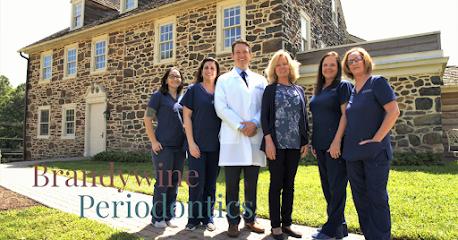


Adults over the age of 35 lose more teeth to gum diseases than from cavities. At least three out of four adults are affected at some time in their life. The best way to prevent cavities and periodontal diseases is by daily thorough tooth brushing and flossing techniques and regular professional examinations and cleanings. Unfortunately, even with the most diligent home dental care, people can still develop some form ofperiodontal disease. Once this disease starts, professional intervention is necessary to prevent its progress.
Periodontal treatment is necessary when various conditions affect the health of your gums and the regions of your jawbone that hold your teeth in place. Retaining your teeth is directly dependent on proper periodontal care and maintenance. Healthy gums enhance the appearance of your teeth, like a frame around a beautiful painting. When your gums become unhealthy, they can either recede or become swollen and red. In later stages, the supporting bone is destroyed and your teeth will shift, loosen, or fall out. These changes not only affect your ability to chew and speak. They also spoil your smile.
Periodontal diseases are ongoing infections of the gums that gradually destroy the support of your natural teeth. Periodontal disease affects one or more of the periodontal tissues: alveolar bone, periodontal ligament, cementum, or gingiva. While there are many diseases which affect the tooth-supporting structures, plaque-induced inflammatory lesions make up the majority of periodontal issues, and are divided into two categories: gingivitis and periodontitis. While gingivitis, the less serious of the diseases, may never progress into periodontitis, it always precedes periodontitis.
Dental plaquebiofilm is the primary cause of gingivitis in genetically-susceptible individuals. Plaque is a sticky colorless film, composed primarily of food particles and various types of bacteria, which adhere to your teeth at and below the gum line. Plaque constantly forms on your teeth, even minutes after cleaning. Bacteria found in plaque produce toxins or poisons that irritate the gums. Gums may become inflamed, red, swollen, and bleed easily. If this irritation is prolonged, the gums separate from the teeth causing pockets (spaces) to form. If daily brushing and flossing is neglected, plaque can also harden into a rough, porous substance known as calculus (or tartar). This can occur both above and below the gum line.
If gingivitis progresses into periodontitis, the supporting gum tissue and bone that holds teeth in place deteriorates. The progressive loss of this bone, the alveolar, can lead to loosening and subsequent loss of teeth. Periodontitis is affected by bacteria that adhere to the tooths surface, along with an overly aggressive immune response to these bacteria.
Periodontal disease is dangerous in that it is often painless and symptomless. 80% of Americans will be afflicted with periodontal disease by age 45, and 4 out of 5 patients with the disease are unaware they have it. It is important to maintain proper home oral care and regular dentist visits to reduce the risk of obtaining this disease.
Over a period of time, the jawbone associated with missing teeth atrophies is reabsorbed. This often leaves a condition in which there is poor quality and quantity of bone suitable for placement of dental implants. In these situations, most patients are not candidates for placement of dental implants.
With bone grafting, we now have the opportunity to not only replace bone where it is missing, but also the ability to promote new bone growth in that location! This not only gives us the opportunity to place implants of proper length and width, it also gives us a chance to restore functionality and esthetic appearance.
Autogenous bone grafts, also known as autografts, are made from your own bone, taken from somewhere else in the body. The bone is typically harvested from the chin, jaw, lower leg bone, hip, or the skull. Autogenous bone grafts are advantageous in that the graft material is live bone, meaning it contains living cellular elements that enhance bone growth. However, one downside to the autograft is that it requires a second procedure to harvest bone from elsewhere in the body. Depending on your condition, a second procedure may not be in your best interest.
Allogenic bone, or allograft, is dead bone harvested from a cadaver, then processed using a freeze-dry method to extract the water via a vacuum. Unlike autogenous bone, allogenic bone cannot produce new bone on its own. Rather, it serves as a framework or scaffold over which bone from the surrounding bony walls can grow to fill the defect or void.
Xenogenic bone is derived from non-living bone of another species, usually a cow. The bone is processed at very high temperatures to avoid the potential for immune rejection and contamination. Like allogenic grafts, xenogenic grafts serve as a framework for bone from the surrounding area to grow and fill the void.
Both allogenic and xenogenic bone grafting are advantageous in that they do not require a second procedure to harvest your own bone, as with autografts. However, because these options lack autografts bone-forming properties, bone regeneration may take longer than with autografts.
This product is processed allograft bone, containing collagen, proteins, and growth factors that are extracted from the allograft bone. It is available in the form of powder, putty, chips, or as a gel that can be injected through a syringe.
Graft composites consist of other bone graft materials and growth factors to achieve the benefits of a variety of substances. Some combinations may include: collagen/ceramic composite, which closely resembles the composition of natural bone, DBM combined with bone marrow cells, which aid in the growth of new bone, or a collagen/ceramic/autograft composite.
Bone morphogenetic proteins (BMPs)are isolated proteins that induces specific cells in our body to form new cartilage and bone. During surgery, the BMP is soaked onto and binds with a collagen sponge. The sponge is then designed to resorb, or disappear, over time. As the sponge dissolves, the bone morphogenetic protein stimulates the cells to produce new bone. The BMP also goes away once it has completed its task of jump starting the normal bone healing process.
Born in Gainesville, Florida and raised in Columbus, Ohio, Dr. Sierakowski has called Philadelphia his home for the past twenty years. He earned his Bachelor of Science degree from Villanova University, and later received his Doctor of Dental Medicine degree (DMD) from the University of Pennsylvania School of Dental Medicine in 2001. He then completed a three-year advanced training program in periodontology at the prestigious University of Connecticut Health Center in 2004. In the same year, he received his Master of Dental Science degree (MDSc), with his research thesis focusing on the connection between periodontal and cardiovascular diseases.
In 2005, Dr. Sierakowski obtained Board Certified status when he was named a Diplomate of the American Board of Periodontology. His repertoire of clinical experience in periodontal therapies includes traditional non-surgical and surgical therapy, periodontal plastic surgery, dental implantology and site development, sinus elevation, and the management of dental anxiety by providing conscious sedation.
Dr. Sierakowskis commitment to dental education is exemplary. Since 2005, he has been a faculty member in the Department of Dental Medicine at the Einstein Medical Center in Philadelphia. In 2009, he was appointed Chairman of the Division of Periodontics, in which he directs the clinical and didactic periodontal education of the General Practitioner Residents each year.
He is the author of First Aid for the NBDE Part I, a comprehensive review text for dental students preparing to take the National Board Dental Examination, a requirement for US dental licensure. It is now in its third edition. His second book, First Aid Q&A for the NBDE Part I, a companion to the first text, was published in 2009.
He maintains active membership in the American Academy of Periodontology, American Board of Periodontology, Academy of Osseointegration, Delaware Valley Academy of Osseointegration, Pierre Fauchard Academy,American Dental Association, Pennsylvania Dental Association, Delaware State Dental Society, and the Dental Society of Chester County & Delaware County.
Dr. Sierakowski is active in the highly-respected Spear Study Cluband Pankey Institute, where he meets with other local dentists and dental specialists to collaborate on patient cases and improve his clinical expertise.